


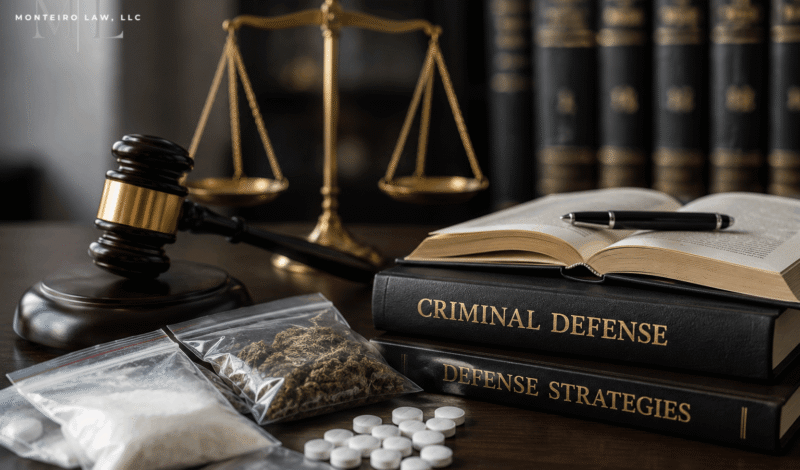

Drug trafficking charges can have life-changing consequences, including lengthy prison sentences, substantial fines, and a permanent criminal record. Prosecutors often devote significant resources to these cases because they frequently involve serious felony allegations.
However, an arrest does not automatically mean a conviction. Every investigation must follow constitutional requirements, and every piece of evidence deserves careful review.
Understanding the available defense strategies may help you make informed decisions from the outset. An experienced criminal defense attorney can evaluate the facts, identify weaknesses in the prosecution’s case, and protect your rights throughout the legal process.
The Prosecution Must Prove More Than Possession
Drug trafficking cases involve more than simply finding controlled substances. Prosecutors must establish every legal element beyond a reasonable doubt before obtaining a conviction. They often rely on physical evidence, witness testimony, digital communications, and forensic testing to support their claims.
Still, each piece of evidence deserves scrutiny because mistakes happen during investigations. When someone faces possession with intent Maryland allegations, prosecutors must prove the drugs were intended for distribution rather than personal use. The surrounding facts often determine whether those allegations withstand legal challenges.
Constitutional Violations Can Weaken the Prosecution’s Case
The Constitution protects individuals from unreasonable searches and unlawful seizures. Officers generally must follow strict legal procedures before collecting evidence during an investigation.
A defense attorney carefully reviews every step taken by law enforcement to determine whether constitutional rights were respected. Even a seemingly minor procedural error may affect whether evidence remains admissible in court.
Cases involving illegal search evidence suppression focus on whether improperly obtained evidence should be excluded. When critical evidence is suppressed, prosecutors may struggle to prove the charges beyond a reasonable doubt.
Every Search Warrant Deserves Careful Examination
Search warrants are not automatically valid simply because a judge approved them. Courts expect officers to provide truthful information and establish sufficient probable cause before obtaining authorization.
Defense attorneys review warrant applications, supporting affidavits, and execution procedures for legal deficiencies. They also examine whether officers exceeded the warrant’s authorized scope during the search.
Strong search warrant defense Maryland strategies may reveal constitutional violations affecting the admissibility of important evidence. These issues can become significant during negotiations or pretrial hearings.
Intent to Distribute Must Be Supported by Reliable Evidence
Drug trafficking prosecutions often depend on proving intent instead of actual distribution. Investigators may point to packaging materials, scales, cash, or electronic communications as supporting evidence.
Those items, however, do not automatically establish criminal intent. Each fact should be evaluated within the broader context of the investigation.
An experienced controlled-substance distribution lawyer carefully analyzes laboratory test results, witness credibility, and chain-of-custody records before challenging the prosecution’s conclusions. Careful preparation often reveals weaknesses that deserve closer examination before trial.
Federal Investigations Present Different Legal Challenges
Some drug cases remain in Maryland state courts, while others are prosecuted in federal court. Federal authorities often become involved when investigations cross state lines or involve larger trafficking allegations.
These cases typically include different procedures, sentencing rules, and investigative resources. Building a strong defense requires understanding both the evidence and the applicable federal laws.
Effective federal drug charges defense MD representation begins with reviewing every investigative step, challenging unreliable evidence, and protecting constitutional rights from the earliest stages of the case.
Multiple Defendants Do Not Automatically Mean Conspiracy
Drug investigations sometimes involve several people who know one another or communicate regularly. Prosecutors may argue those relationships prove an agreement to distribute controlled substances.
However, association alone does not establish criminal conspiracy under the law. The government must prove that each defendant knowingly participated in the alleged criminal agreement.
An experienced conspiracy drug charges attorney carefully evaluates statements, electronic communications, and witness testimony to determine whether prosecutors can meet that legal burden beyond a reasonable doubt.
Sentencing Depends on Many Important Factors
A conviction does not automatically result in the harshest available penalty. Maryland courts consider numerous factors before imposing a sentence, including criminal history, the type of substance involved, and the specific facts surrounding the alleged offense.
Negotiations with prosecutors may also influence the outcome. An experienced Eastern Shore drug crime lawyer works to present mitigating information that supports the most favorable resolution possible. Careful preparation remains valuable during every stage of the criminal process.
Building the Strongest Defense Starts Early
Speaking with investigators without legal guidance may unintentionally harm your defense. Seeking legal advice early allows important evidence to be preserved while your attorney evaluates the prosecution’s claims.
Understanding the possible penalties, including felony drug sentencing in Maryland, also helps you make informed decisions throughout the legal process rather than reacting under pressure.
The National Institute on Drug Abuse notes that drug laws and enforcement vary depending on the substance and surrounding circumstances, making careful legal analysis essential in every case.
How Monteiro Law Can Help
Facing drug trafficking charges can feel overwhelming, but early legal guidance can make an important difference. Monteiro Law represents individuals throughout Salisbury, Wicomico County, Worcester County, and Maryland’s Eastern Shore.
As a former prosecutor, Jared Monteiro understands how these cases are investigated and prosecuted. Every case receives careful attention based on its unique facts and legal issues. If you have questions about your situation, call (443) 397-4939 or contact us through our contact page to discuss your options confidentially.
Frequently Asked Questions
What is the minimum sentence for drug trafficking?
There is no fixed minimum sentence for drug trafficking in Maryland. Penalties depend on the type and quantity of the drug, whether the case is in state or federal court, prior convictions, and other case-specific factors. Some offenses may involve mandatory minimum sentences, while others do not.
What are the types of drug trafficking?
Drug trafficking offenses commonly include:
- Possession with intent to distribute
- Manufacturing controlled substances
- Selling or delivering illegal drugs
- Transporting controlled substances
- Drug conspiracy
- Importing or exporting illegal drugs
The charge depends on the alleged conduct and the evidence presented.
How many years of jail for drug trafficking?
Drug trafficking convictions can result in several years of imprisonment, depending on the circumstances. Factors such as the drug involved, the quantity, prior convictions, and whether the case is prosecuted in federal court all affect the potential sentence. An attorney can explain the penalties that may apply to your specific case.