

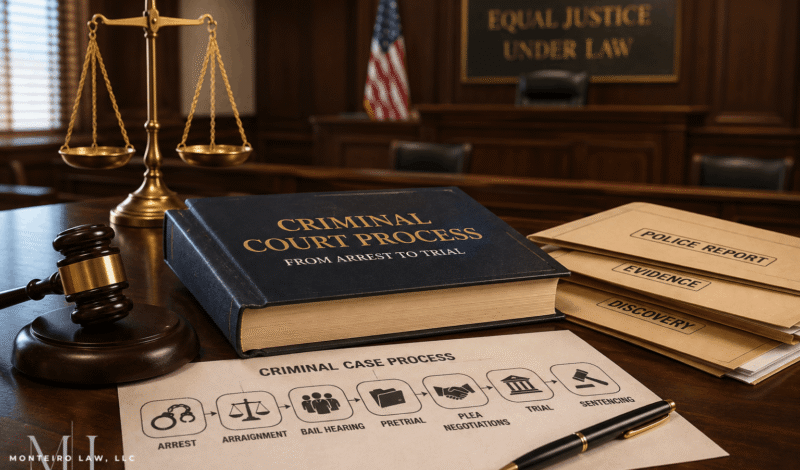

The criminal court process begins the moment someone is arrested and continues until the case is resolved through dismissal, a plea agreement, or trial. Maryland courts follow established procedures designed to protect constitutional rights while moving cases through the justice system.
Every case is unique, but knowing what to expect can make the experience less intimidating. Early legal guidance also helps preserve important rights and prepares a stronger defense from the beginning. Understanding each stage helps reduce uncertainty and allows defendants to make informed decisions.
Arrest, Booking, and Your First Steps
A criminal case often starts when law enforcement makes an arrest based on probable cause or a valid warrant. Officers then complete the booking process by recording personal information, taking fingerprints, and documenting the alleged offense.
Depending on the circumstances, the person may remain in custody or be released before the first hearing. The hours following an arrest are important because statements or decisions made during this time may affect the case later. Speaking with an attorney before answering detailed questions is often beneficial.
The Maryland Arraignment Process
The first court appearance introduces the defendant to the formal court process. During the Maryland arraignment process, the judge explains the charges, reviews important legal rights, and addresses the next procedural steps.
Some defendants enter an initial plea, while others simply receive future court dates. Missing this appearance can create additional legal complications. Preparing beforehand helps defendants understand courtroom expectations and avoid unnecessary confusion.
A clear understanding of the process also allows the defense to begin evaluating possible legal strategies from the earliest stage of the case.
What Happens During a Hearing with a Bail Hearing Lawyer in MD
Following the initial appearance, many defendants attend a hearing that determines whether they remain in custody while the case proceeds. An experienced bail hearing lawyer MD presents information supporting release under appropriate conditions. Judges consider several factors before making this decision, including:
- The seriousness of the alleged offense.
- Prior criminal history.
- Community and family ties.
- Employment and financial stability.
- Risk of failing to appear in court.
- Potential concerns for public safety.
A well-prepared presentation can improve the chances of obtaining reasonable release conditions while the case continues.
Criminal Case Stages Explained Before Trial
Once release decisions are complete, the case enters the preparation phase. These criminal case stages explained include evidence review, witness interviews, legal research, and pretrial motions.
Prosecutors must disclose much of the evidence supporting the charges. Defense counsel carefully examines every document for inconsistencies or constitutional issues. Attorneys may also challenge unlawful searches, unreliable witness testimony, or improperly collected evidence.
Strong preparation during this stage often influences later negotiations and trial strategy. Thorough investigation may uncover facts that significantly strengthen the defense before court proceedings continue.
Developing a Defense Attorney Court Strategy
Every criminal case requires careful planning before entering the courtroom. An effective defense attorney court strategy focuses on protecting constitutional rights while identifying weaknesses in the prosecution’s evidence.
Attorneys may review surveillance footage, challenge the credibility of witnesses, consult experts, and file motions to suppress illegally obtained evidence. Strategic decisions also depend on the defendant’s goals and the available facts.
Careful preparation allows the defense to respond effectively to unexpected developments and present the strongest possible arguments throughout every stage of the criminal proceedings.
Considering the Plea Bargaining Process in Maryland
Not every criminal case proceeds to trial. The plea bargaining process in Maryland allows prosecutors and defense attorneys to negotiate possible resolutions before a judge hears the evidence.
A plea agreement may reduce certain charges, recommend a lighter sentence, or resolve the matter without trial. Every offer deserves careful review because accepting a plea usually waives important trial rights.
Defendants should understand every consequence before making a decision. Legal advice helps ensure that any agreement serves the client’s long-term interests rather than immediate convenience.
Navigate the Criminal Court Process with Experienced Legal Guidance
Facing criminal charges can feel uncertain, but understanding each stage helps you make informed decisions. From arrest through sentencing, every hearing presents opportunities to protect your rights and strengthen your defense.
An experienced attorney can explain your options, prepare you for court, and advocate for your best interests at every step. If you need guidance through the criminal court process, Monteiro Law is ready to help.
Contact our firm through our contact page or call (443) 397-4939 to discuss your situation and learn about your legal options.
Frequently Asked Questions
What is the procedure for criminal court cases?
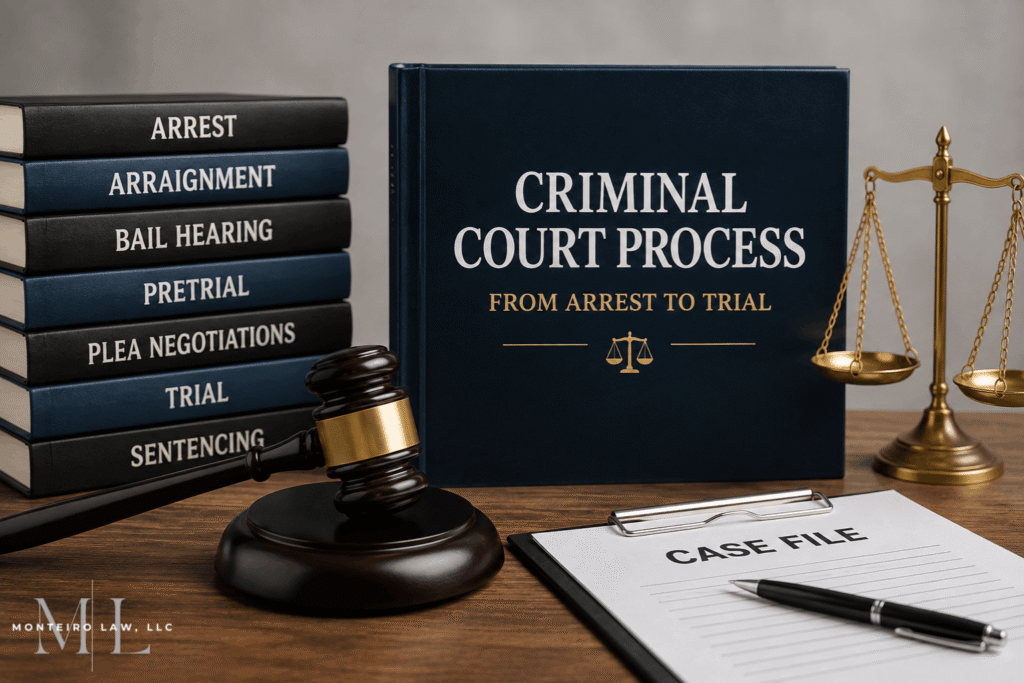
The criminal court process generally follows several key steps. It begins with an arrest or criminal charge, followed by booking and an initial court appearance. The court then addresses bail or release conditions, and the prosecution and defense exchange evidence during discovery.
Pretrial hearings and motions may resolve legal issues before trial. If the case is not dismissed or resolved through a plea agreement, it proceeds to trial. If the defendant is convicted, the court conducts a sentencing hearing. In Maryland, the exact procedure depends on the charges and the court handling the case.
What are the 7 steps of a trial?
The seven basic steps of a criminal trial are:
- Jury selection (if the case involves a jury)
- Opening statements by both sides
- Presentation of the prosecution’s evidence
- Presentation of the defense’s evidence
- Closing arguments
- Jury instructions and deliberation (or the judge’s deliberation in a bench trial)
- Verdict
If the defendant is found guilty, the court schedules a separate sentencing hearing.
What are the steps of the criminal process?
The criminal process typically includes these steps:
- Investigation
- Arrest or issuance of criminal charges
- Booking
- Initial appearance or arraignment
- Bail hearing (when applicable)
- Discovery and pretrial motions
- Plea negotiations
- Trial
- Verdict
- Sentencing
- Appeal, if appropriate
Although these stages are common across the United States, the procedures and timelines vary by state, including Maryland.